

Weeks of work to design 42 box culverts
On a recent project, Mott MacDonald's bridges team designed 42 precast box culverts, and getting from design inputs to a design intent took over a month. A box culvert is a rectangular concrete structure buried under fill, often carrying water beneath a road or railway. Each one has to be designed for a maximum and a minimum fill case, and for various vehicular load models, governed by the Eurocode framework and relevant Design Manual for Road and Bridges (DMRB) standards in the UK.
By hand, the LM3 load takedown alone took about four days per fill case, because the least favourable vehicle position changes with the depth of fill and has to be found by checking many positions. Extracting and sorting the analysis results could take up to five days.
"Doing the load takedown itself wasn't the long part. It was doing it for multiple locations, and then filtering through the data to find out if that was truly the worst place it could be."

Bradley Borland
Bridges engineer at Mott MacDonald
A supplier needs consistent designs, and differences between engineers can lead to more discussion with the supplier, which costs time and budget and puts pressure on the program.
From hand calculations to a chain of spreadsheets
With no existing method available for quickly ascertaining the least effective LM3 vehicle position, Bradley developed his own: a Visual Basis for Applications (VBA) based iterative analyser cutting the load takedown from days to just thirty minutes on average. Together with existing spreadsheets developed for the other steps, Bradley’s analyser formed a workflow in which engineers set up thousands of load combinations in Excel, built four MIDAS CIVIL NX models one by one, copied the results per envelope into separate sheets and checked the supplier's reinforcement design by hand.
The spreadsheets worked, but they were hard to use without instruction, and a single incorrect input or use of the spreadsheet could produce unusable results.
Bradley saw an opportunity to combine these separate tools into one integrated design process. When Mott MacDonald began using VIKTOR AI, he found the platform well suited to it.
How Mott MacDonald automates precast box culvert design with VIKTOR AI
Bradley turned his team's chain of spreadsheets into one automated workflow. Building it didn't take extensive programming skills: he used the App Builder on the VIKTOR AI platform to write the code. The App Builder could read the roughly 20,000 lines of VBA from the original spreadsheets, so he did not have to translate them himself.
The final workflow takes the engineer from inputs to a reinforced concrete design intent, running every intermediate step the same way each time, with checks along the way. The engineer's main job is now getting the inputs right.
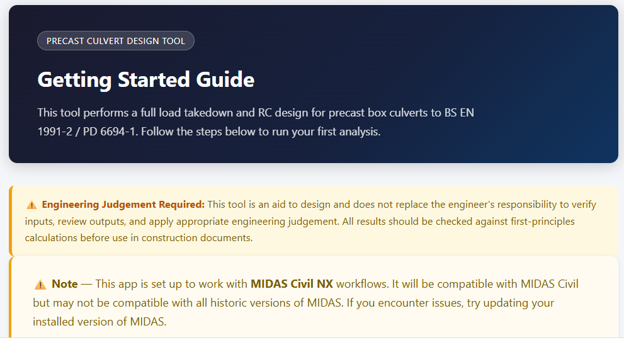
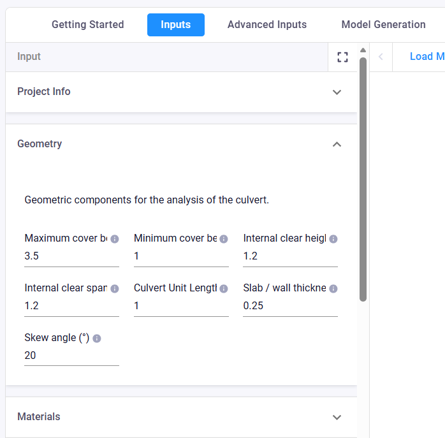
Step 1: Enter the inputs and check load takedown
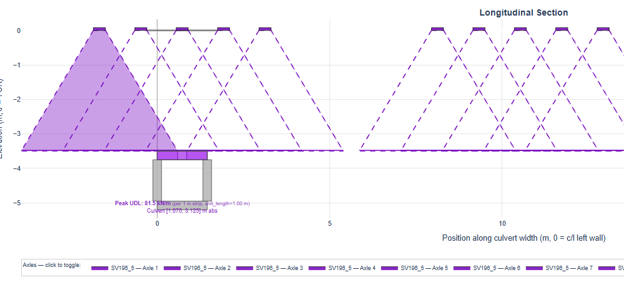
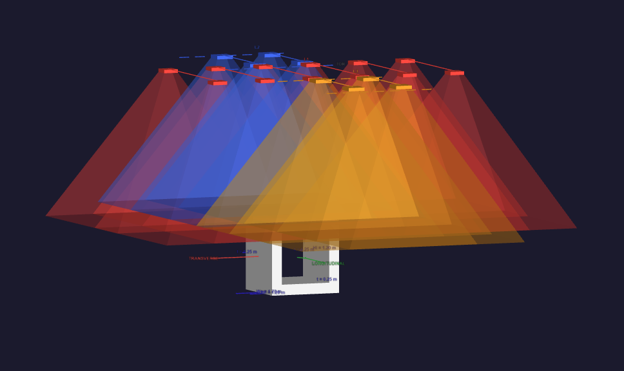
Those inputs are the culvert geometry, fill levels and loading. Once they're entered, the engineer can check the load takedown and characteristic loads in interactive diagrams and a 3D view, with the iterative analysis updating instantly.
Step 2: Generate load combinations and the MIDAS models
From there, the app generates all load combinations and an Midas Civil Text (MCT) command file that builds the four analysis models in MIDAS CIVIL NX.
Step 3: Calculate envelopes, optimize reinforcement and generate the design report
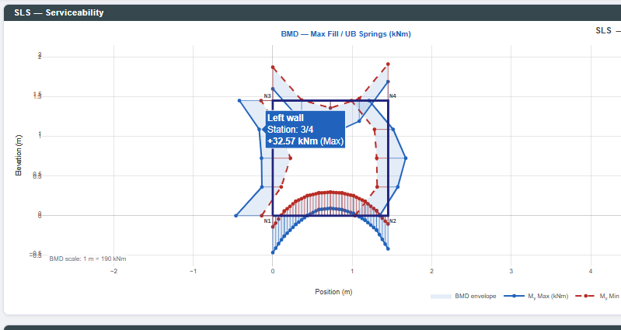
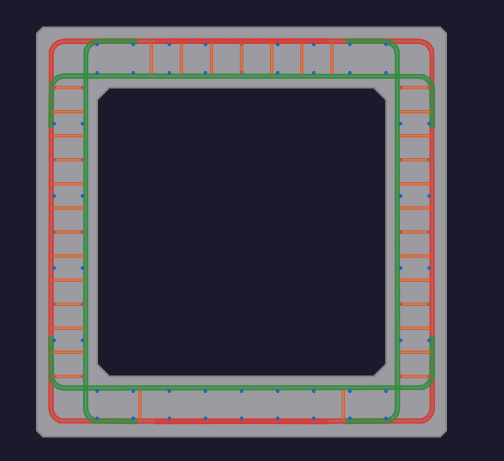
After running the models, the engineer uploads the exported results; around 90,000 to 100,000 rows. The app calculates the Ultimate Limit State (ULS), Serviceability Limit State (SLS) and SLS quasi-permanent envelopes, optimizes the reinforcement towards a 95% target utilization and checks crack widths. The output is full design report in Mott MacDonald's house style, with the code clause, formula, and value behind every result included.
What is VIKTOR AI?
VIKTOR AI is a platform that turns engineering challenges into verified solutions, safely and at scale. Engineers use it to automate engineering processes through AI-powered apps, agents and workflows, and share them with their team with access control and version management built in.
Because the platform provides the user interface and hosts everything centrally, Bradley's colleagues can run the culvert workflow in their browser without installing anything.
"Engineers now have access to something they've traditionally never had access to, and that's a software engineer. I think it's absolutely fine to code using AI, as long as you can read, debug and understand what the code is doing."
Bradley Borland
Bridges engineer
The result: box culvert design from a month and a half to about a week
With VIKTOR AI, Mott MacDonald expects the full box culvert design process, from inputs to design intent, to drop from a month to approximately one week, a saving of 120 hours per individual design. That estimate takes into account the time needed to wait on inputs from other teams. The biggest efficiency gain is in the LM3 load takedown, which went from about four days by hand to instantaneous results with Bradley's application.
Beyond saving time, the app ensures every culvert follows the same design method, whichever engineer runs it, and generates every load combination, including ones the old spreadsheet didn't cover. The precast supplier gets a clear minimum design intent to work on, instead of the team checking the supplier's design afterwards. Every step is also open for checking, from the interactive load diagrams to a report with clause references and formulas.
Culvert design is often tightly priced. By being able to design culverts faster, and more consistently, the team at Mott Macdonald can improve project margins, particularly in projects containing many such structures.
What's next: senior review, project use and more culvert types
The culvert design app now does everything it needs for box culvert designs. The next step is testing and quality assurance with colleagues across the bridges team, making it possible for the workflow to bring together the experience the team has built up on earlier projects. The app is part of a wider technical excellence initiative at Mott MacDonald, which also includes a design playbook for these structures. The goal is to have the design tools ready for use by the end of the year for use on upcoming projects, some potentially including more than 100 culverts!
Automate your engineering processes with VIKTOR AI
Automating the culvert design process turns work that took over a month into about a week and ensures every engineer on the team uses the same method to work with. As almost every large infrastructure project includes culverts, that saving in time and budget grows with every project the team takes on.
Want to see how your team can automate repetitive design work like Mott MacDonald? Book a demo.

Let us show you how VIKTOR
can help you solve any challenge
Related Customer Cases

Get our best content in your inbox
Subscribe to our newsletter and get the latest industry insights