About TLI Group
TLI Group is a critical utility infrastructure service provider operating extensively across Ireland, Northern Ireland and the UK, delivering high-profile, multi-disciplinary projects across the utilities sector. The company plays a leading role in the development of safe, reliable and sustainable networks that support future generations.
Supporting this capability, TLI Group’s Engineering function contributes to the delivery of end-to-end, EPC risk-assured solutions across renewables and grid infrastructure projects. The multi-disciplinary team is involved in the design, build and commissioning of grid connections and substations for wind, solar, BESS and offshore developments. Through the use of industry-leading design software and a strong emphasis on practical buildability, TLI Group delivers effective engineering solutions that enable the reliable connection of renewable generation to the national grid.
Why traditional workflows don’t scale
Like many engineering teams, the work at TLI Group relies heavily on spreadsheets and specialized calculation tools. Engineers typically work with several Excel spreadsheets for calculations and documentation, followed by structural verification using external engineering software. Once the calculations are complete, engineers manually assemble multiple PDF reports and share the results with colleagues responsible for drawings.
Besides being time-consuming, this workflow also introduces risks. Small changes or errors in spreadsheets can easily propagate across projects, and reviewing designs requires navigating multiple files.
“Sometimes a small mistake in one spreadsheet can propagate through several projects before someone notices it.”
For Jonathan, the biggest frustration was not the engineering itself, but the repetitive administrative work surrounding it.
“Printing PDFs and assembling files is not engineering work. That time is better spent on the design itself.”
Centralising and automating workflows with VIKTOR AI
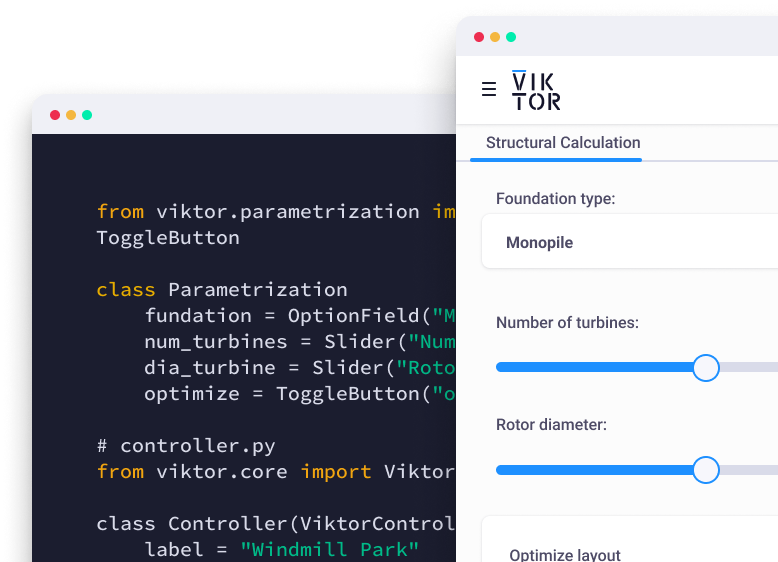
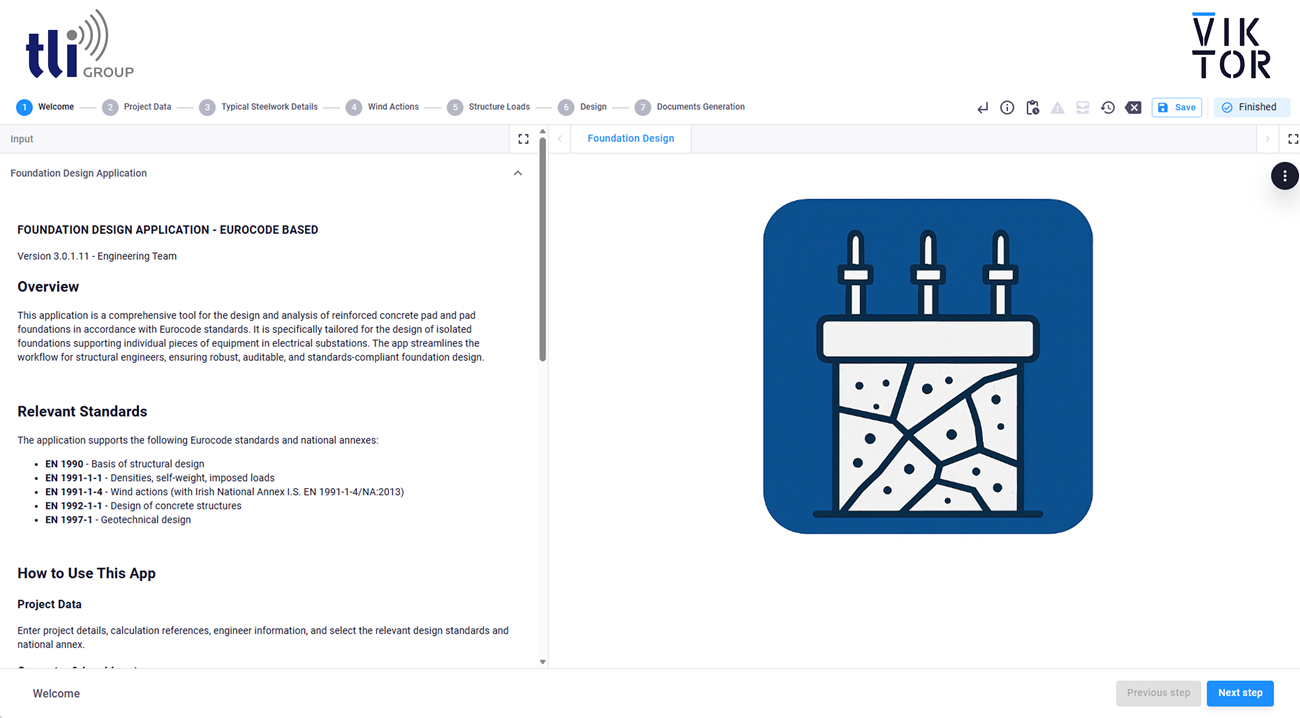
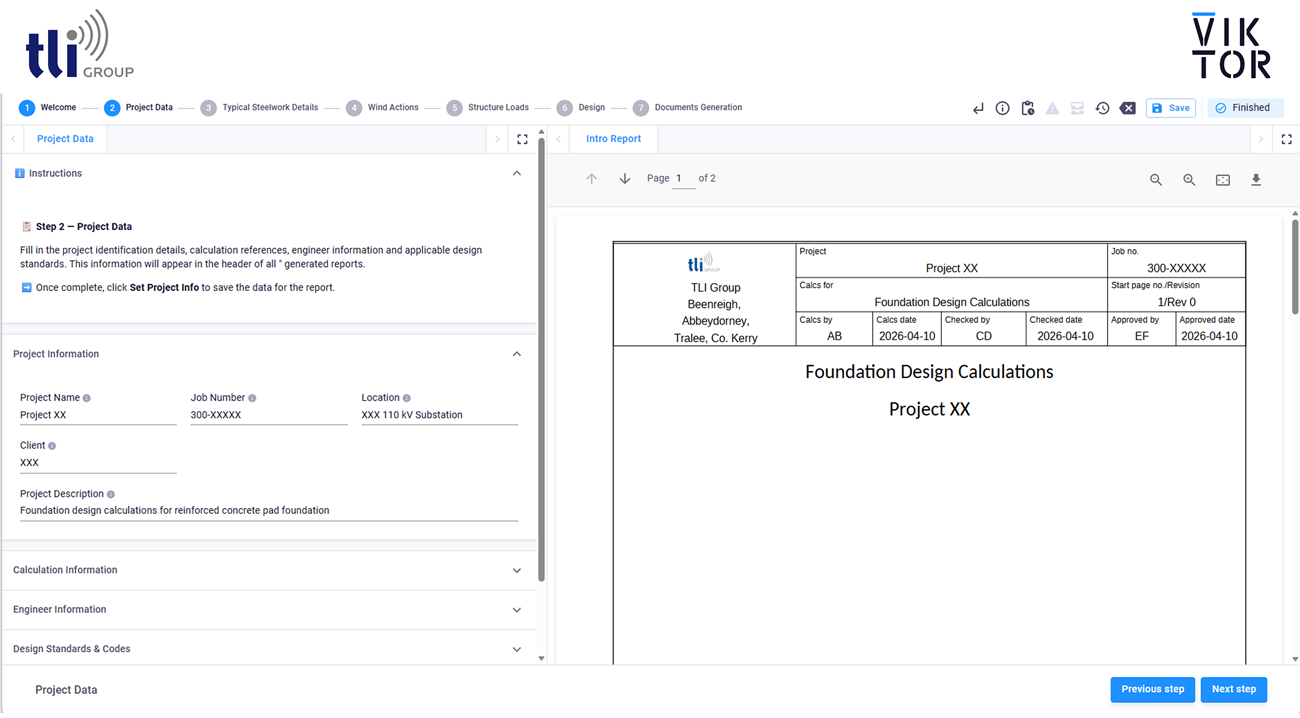
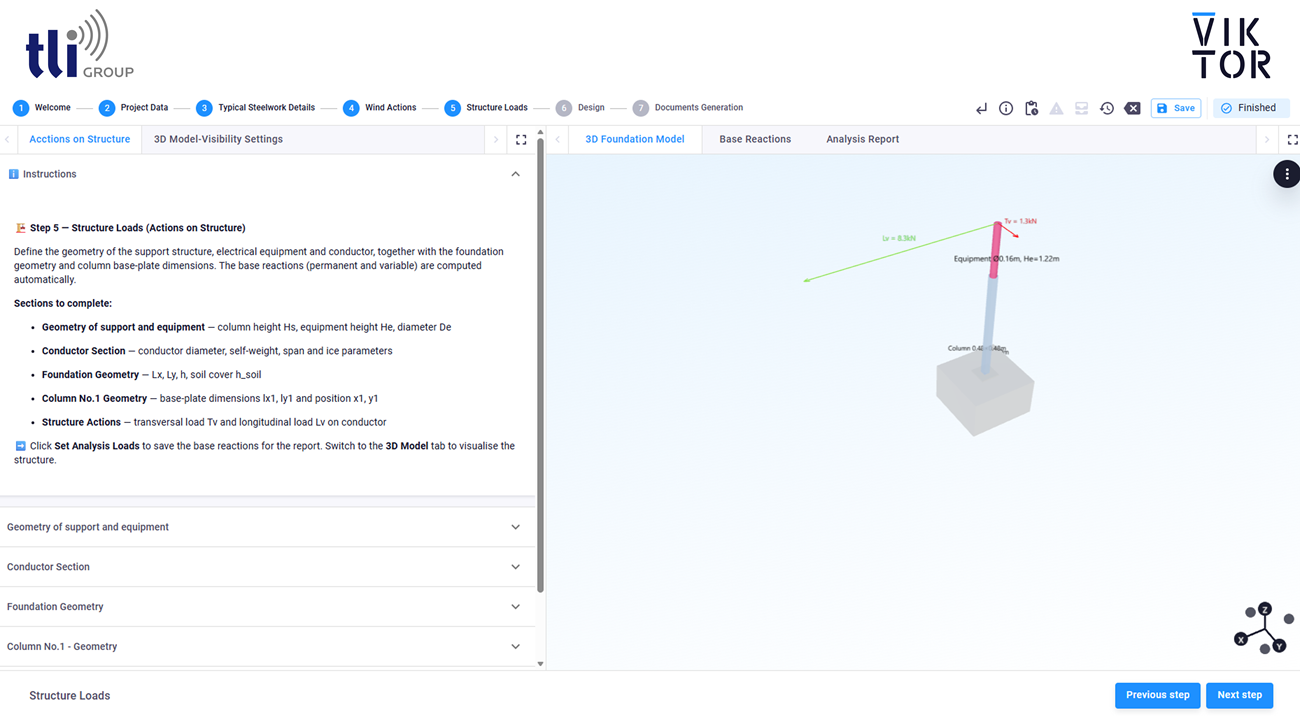
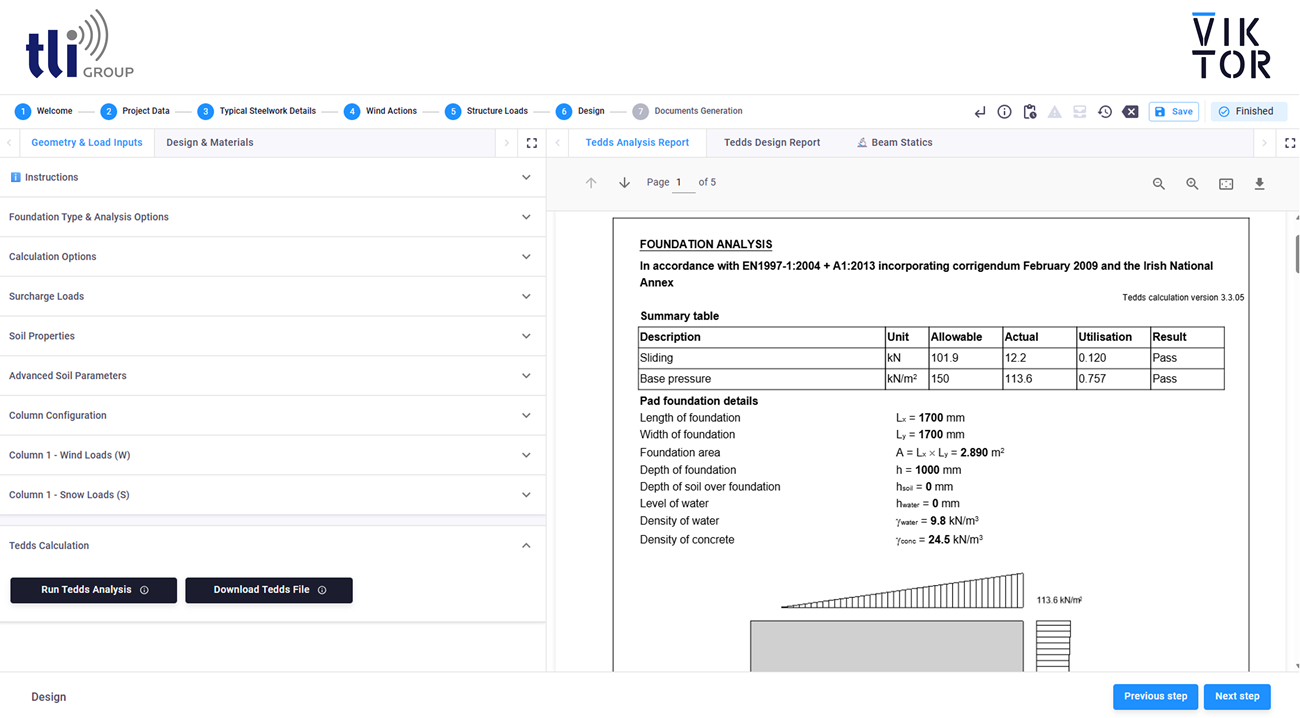
To improve the process, Jonathan built an app with VIKTOR AI. The app centralizes multiple steps from the design workflow in one environment. Engineers can use the app to enter input, perform calculations, generate foundation geometry, and produce structural design reports.
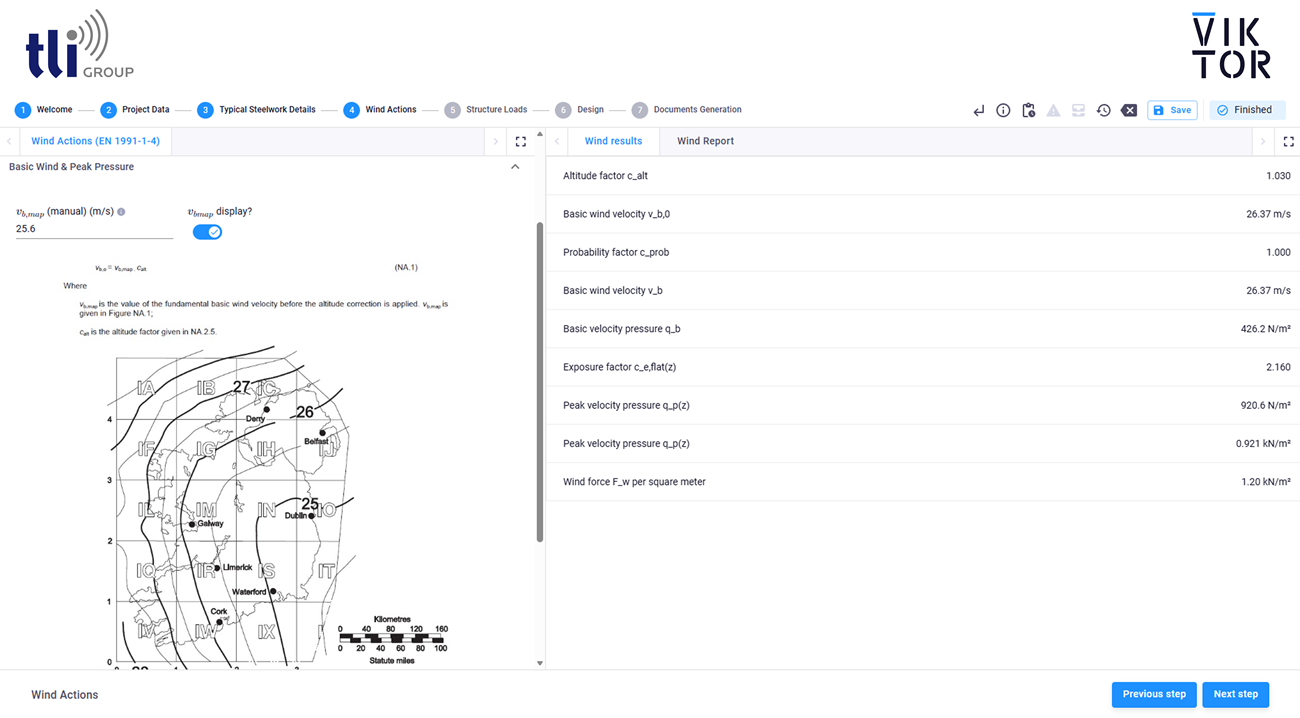
An important part is the integration with Tekla Tedds, a widely used structural calculation software from Trimble. By connecting VIKTOR to existing engineering software, the app combines automation with trusted calculation methods. This ensures that engineers still rely on validated engineering standards.
“For me, the biggest value of VIKTOR is the ability to connect everything, geometry, calculations, and reports, in one place and update them all at the same time.”

Jonathan Palacios
Civil Engineer at TLI Group
How the app transforms daily work
Automating manual work
The application automates several steps that were previously done manually across multiple files and tools. Engineers enter the required design inputs once, after which the application performs calculations, runs the structural verification, and generates the final design report automatically.
80% faster design cycles
What previously took around 45 minutes per design can now be completed in 5–10 minutes. This represents an expected time reduction of around 80% per design, allowing engineers to focus more on engineering decisions rather than administrative tasks.
One source of truth
The application also improves collaboration. Instead of sharing multiple spreadsheets and reports, engineers can simply share the application itself, ensuring everyone works from the same source of information.
“Instead of sending files back and forth, you can just share the application and everyone works from the same place.”
What’s next?
The current application focuses on foundation design for substation equipment, but it is only the starting point. Jonathan plans to expand the concept by building additional applications for other engineering tasks within substations. These applications could eventually be connected into larger automated workflows using the VIKTOR Workflow Builder.
For him, the motivation is simple: remove repetitive work so engineers can spend more time solving real engineering problems.
“If something in your workflow frustrates you or doesn’t add value, that’s probably the best place to start automating.”
Jonathan Palacios
Engineer at TLI Group
Start automating your workflows
With VIKTOR, every engineer can build AI-powered apps, workflows, and agents. Turn weeks of work into hours, connect with software you already use, and share safely with others.