
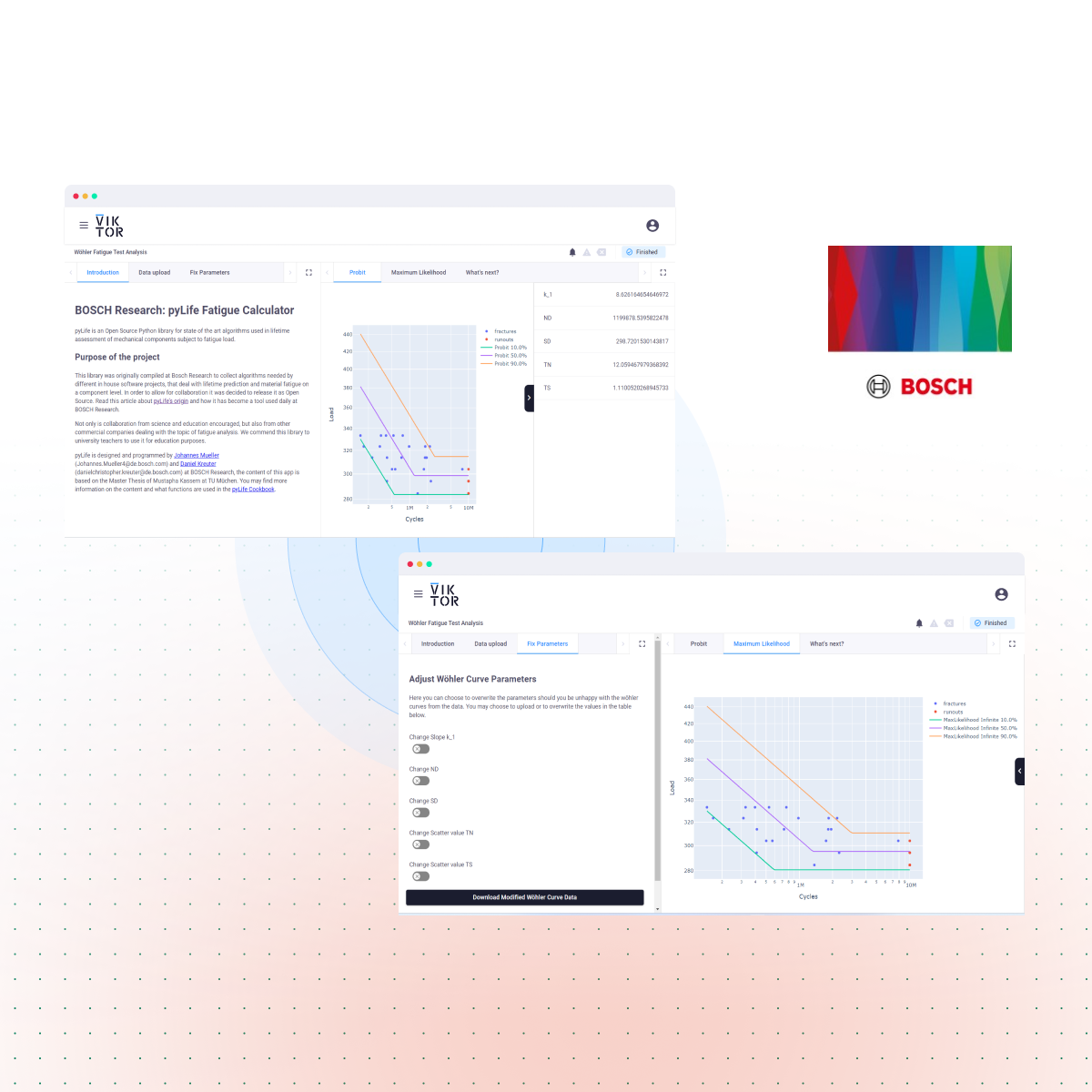
The challenge: fatigue methods that stay with a few specialists
Fatigue methods take real effort to develop, so they often end up with a few specialists. At Bosch, several separate initiatives were developing advanced calculation methods at the same time. Teams risked rebuilding methods that already existed elsewhere in the company. Sharing those methods as a library solved part of the problem. Using one still meant working with code, which kept it out of reach for many engineers.
By now, Bosch's internal open-source community has led pyLife to grow into a package with modules for lifetime prediction and material fatigue on a component level. From rain flow counting, predicting failure probabilities and damages, to assessing the lifetime span of electric motors for powertrains.
"The reality is that not all colleagues are comfortable with programming; this is a challenge when distributing tools like pyLife." Johannes Mueller, Material Research engineer at Bosch
What is pyLife?
pyLife is Bosch's open-source library of algorithms for the lifetime assessment of mechanical components subject to fatigue load. Johannes came up with the idea after joining Bosch in 2008, when he ran into the limits of commercial engineering software. Bosch collected its most used algorithms into one library everyone could access, instead of reinventing the wheel on every project.
Bosch's internal open-source community has since grown pyLife into modules for lifetime prediction and material fatigue at component level. They range from rainflow counting and predicting failure probabilities and damage to assessing the lifespan of electric motors for powertrains. Mechanical engineers, academics and students outside Bosch use it too.
"The aim of pyLife is to make specialistic knowledge available to others through open-source software." Johannes Mueller, Material Research engineer at Bosch
From a shared library to verified engineering solutions
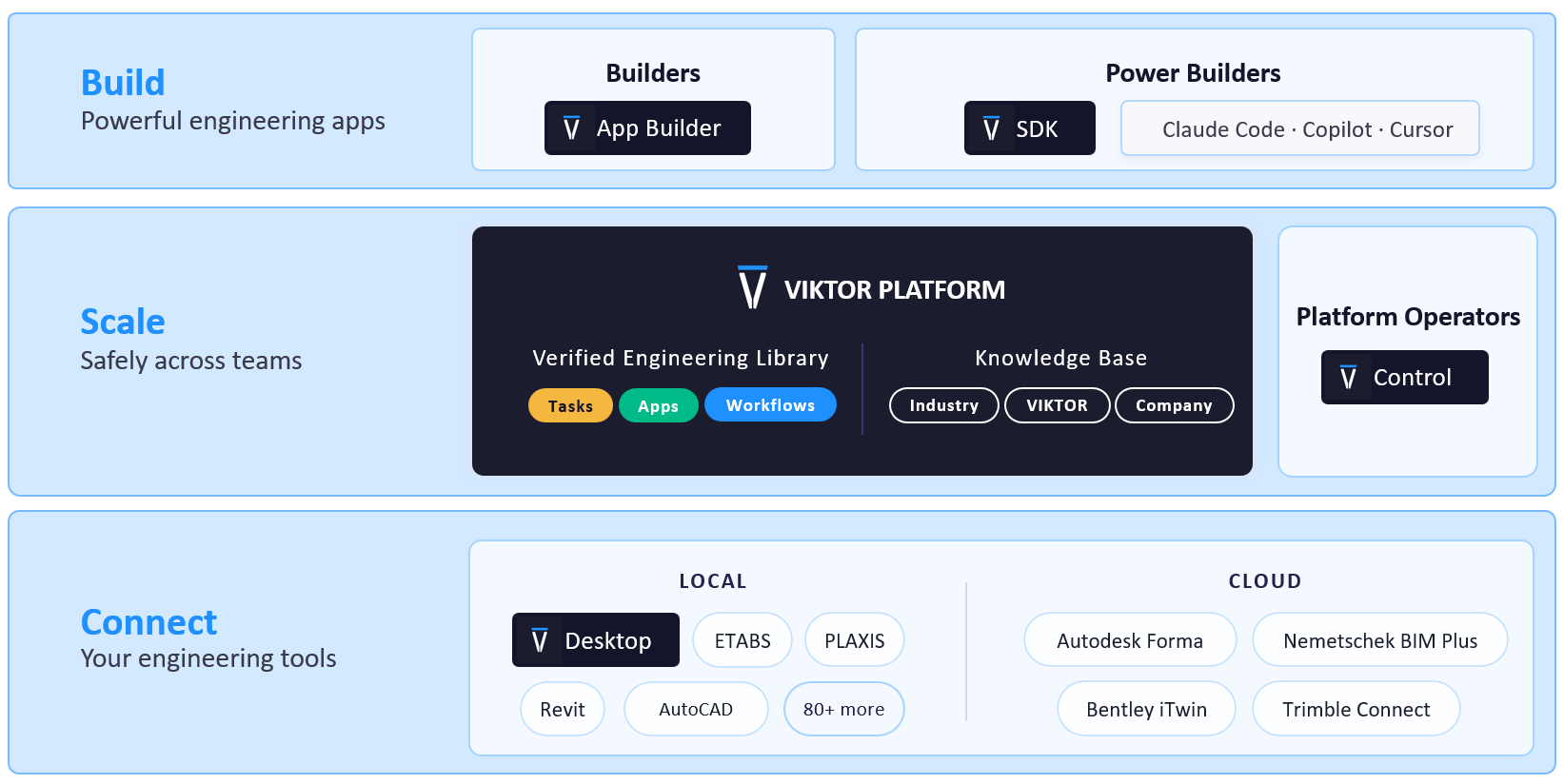
A shared library like pyLife stops engineers from rebuilding proven methods. The VIKTOR AI platform applies the same idea to engineering work across a whole organisation. VIKTOR AI is an AI platform that turns engineering challenges into verified solutions, safely and at scale.
Tested apps and workflows go into the Engineering Library, where colleagues find them and run them on a new project with their own data. The Knowledge Base stores the company knowledge behind those workflows, so it stays available for future projects and stays yours.
This is also where AI agents come in. VIKTOR Agents plan and run engineering workflows, and they rely on tested apps for the calculations themselves. Apps bring the rigor, agents bring the flexibility. An app's fatigue calculation, such as a Palmgren-Miner damage sum, gives the same result every time, which is what an engineer needs to sign off on it. A large language model (LLM) can give two different answers to the same question.
How to automate fatigue analysis with VIKTOR AI and pyLife
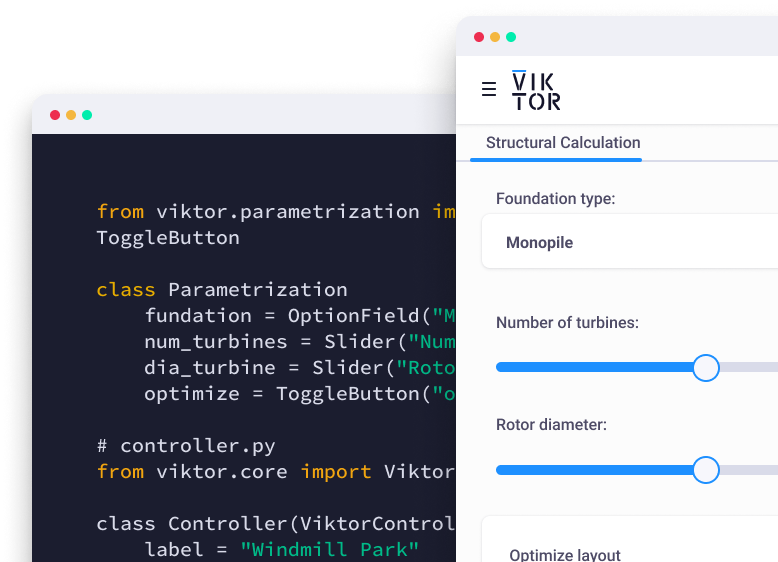
With VIKTOR AI, you connect to pyLife from the VIKTOR App Builder, in your browser and without coding. You describe the fatigue analysis you want to automate, AI builds the app, and you inspect the code and test the results. Developers can also code the app locally with the VIKTOR SDK, a set of ready-made building blocks for writing engineering apps, on their own or with AI coding tools such as Claude Code. Read more about choosing between the two ways to build apps.
How do I calculate fatigue damage from a load history with VIKTOR AI and pyLife?
This prompt automates the full chain from a measured load history to a damage result. pyLife counts the load cycles with rainflow counting and calculates the damage with the Palmgren-Miner rule.


Calculate fatigue damage from a load history
How do I check fatigue damage with the Palmgren-Miner rule using AI?
This prompt checks fatigue damage for cycle counts you already have. It states the goal (total fatigue damage for a set of counted cycles), the boundary conditions (uniaxial elastic, fully reversed loading with zero mean stress), the rules (log-log interpolation on the S-N curve and the Palmgren-Miner sum) and when the result fails (D ≥ 1).
Build this app now
Governed, verified and traceable fatigue apps
Before a fatigue app reaches colleagues, the VIKTOR AI platform makes sure it is governed, verified and traceable. Engineers stay responsible for validating the methods and the results.
- Governed: VIKTOR Control manages who can access which apps and project data, and every app moves through development, testing, acceptance and production (DTAP) before release.
- Verified: teams review the AI-generated code and test the calculations before an app goes live.
- Traceable: the calculation runs as readable code, so engineers can follow how each result was derived.
Building the app is only part of the work. Getting it to colleagues safely also takes hosting, user access and deployment, which the platform handles.
"The most interesting part about VIKTOR is that it also handles all the complicated processes, like the hosting. You can just install it and start making and sharing apps, and others can use the apps without installing anything." Johannes
Conclusion
With VIKTOR AI and pyLife, fatigue analysis no longer has to stay with a few specialists. Engineers describe the analysis in the App Builder, connect to Bosch's proven fatigue methods, and share the result as an app their team can test, govern and reuse across projects. Want to see how this works for your engineering team? Book a demo.
Start automating your workflows
Related Blog Posts
Get our best content in your inbox
Subscribe to our newsletter and get the latest industry insights